Identifying your fruit
Explaining the options
How do you identify apples and pears?
Apples and pears are traditionally identified by morphology — that means examining their appearance, taste, texture and, for cooking varieties, how they cook. This remains an essential part of MAN’s work and has helped rediscover many lost varieties.
Identifying apples and pears
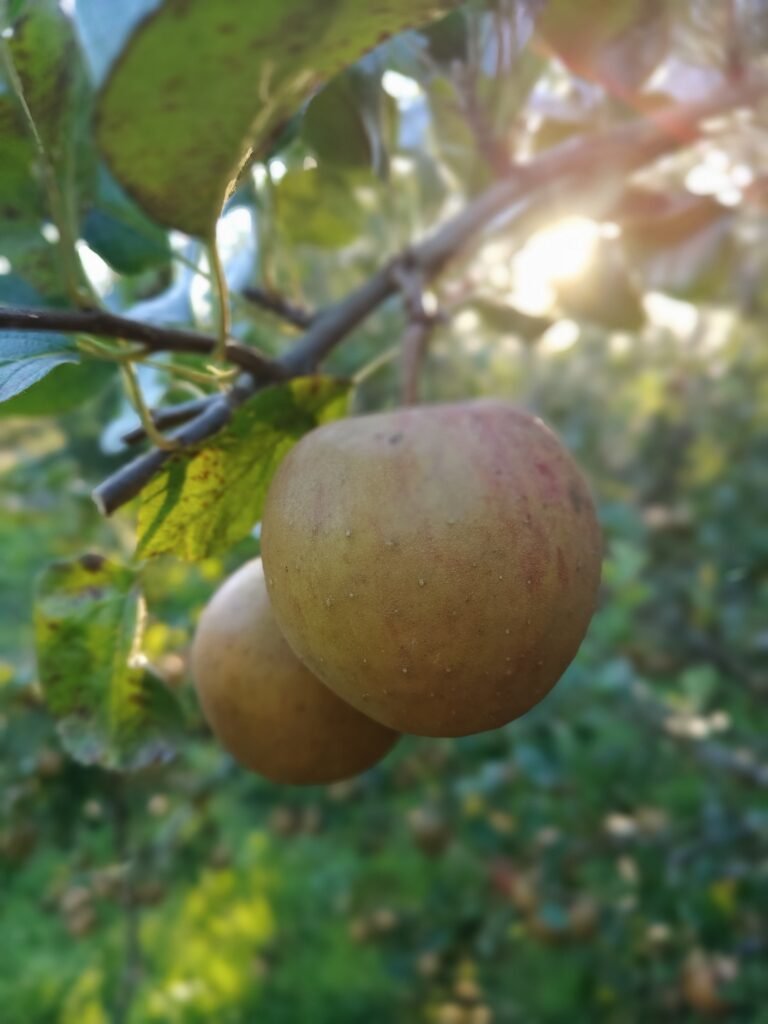
First, we look at its shape, size, colour, taste and texture – referred to by experts as ‘morphology’. For cooking apples, we also see how they cook. This traditional method is still very important and often gives us the first clues.
See below for how to help us identify your apples.
The National Fruit Collection at Brogdale, Kent has a great online catalogue of fruit varieties.
Rediscovering ‘lost’ varieties
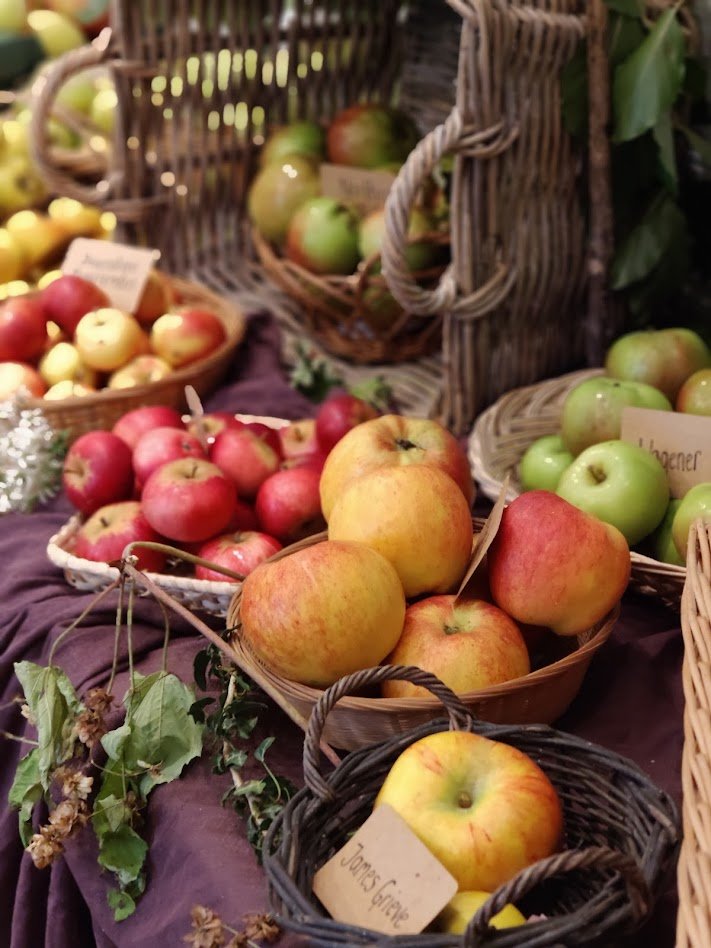
Many “lost” varieties have been rediscovered when people bring us fruit from old trees.
Sometimes identification is quick, but in other cases we may need to:
• take a cutting (scion) from the tree
• graft it onto a young tree
• grow it on so the fruit can be studied properly
This careful process helps us be sure we have the correct name.
DNA Testing
It’s also possible to use modern DNA testing (for a fee), which allows labs to compare your fruit with a large reference collection. This has greatly improved the accuracy of identification and helps confirm whether you have found a rare or historic variety.
Who are the parents?
DNA testing can also show when varieties are closely related and can rule out incorrect parentages.
However, it cannot always tell us the exact parents of a fruit.
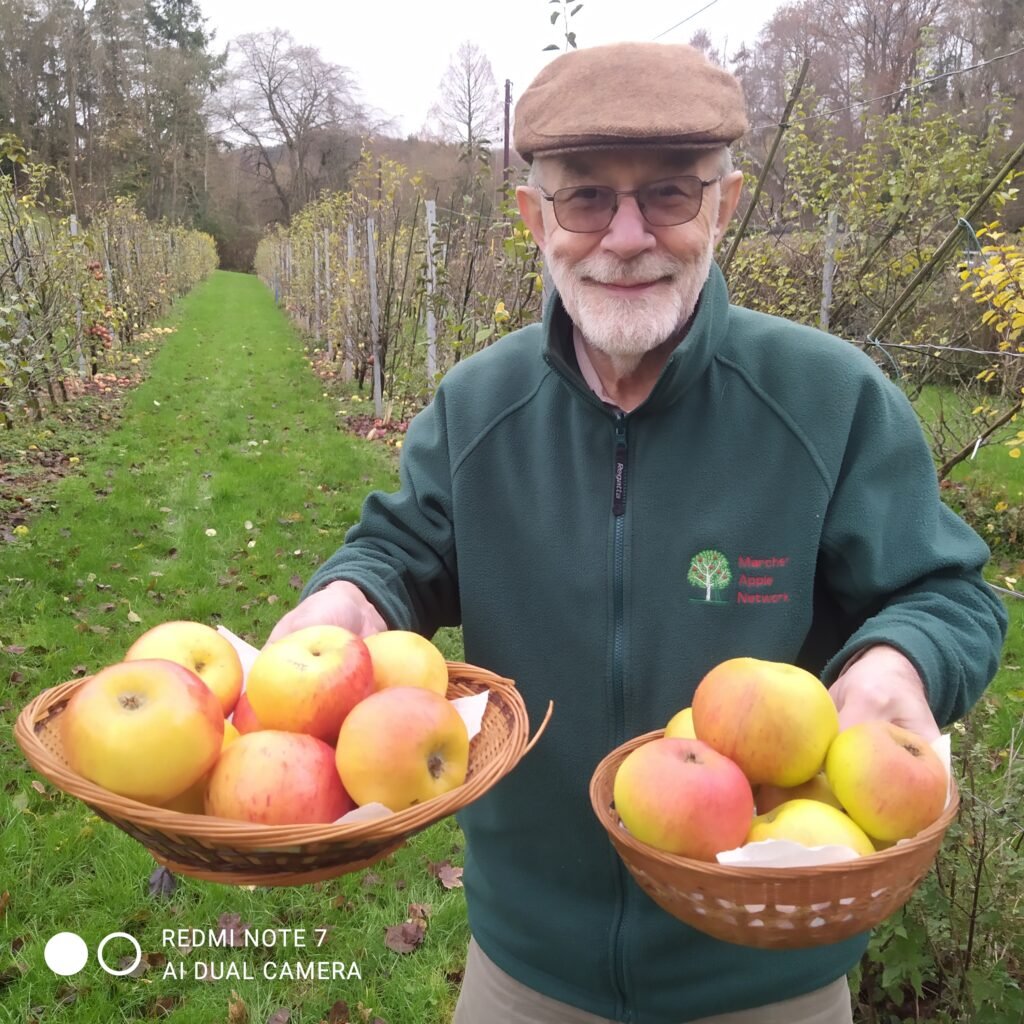
Try the online Fruit identification websites
The Fruit ID website is a great online resource. They have images, descriptions and DNA fingerprints for common apple varieties grown in the UK. Plums are also well covered while work continues on pears and cherries.
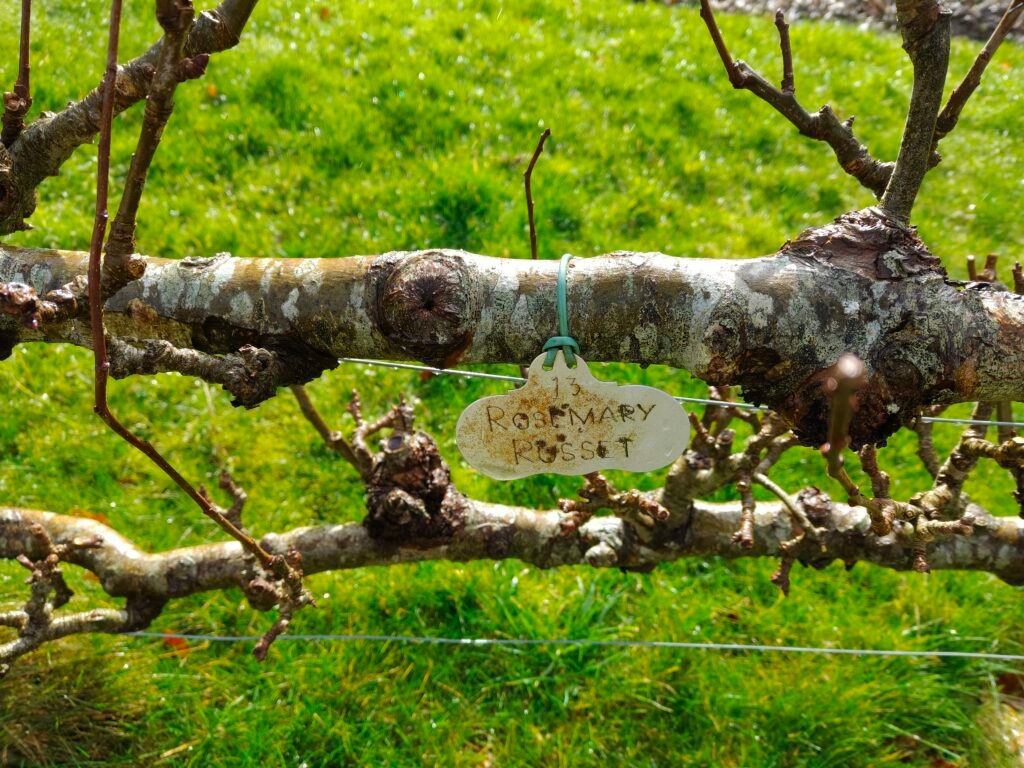
Confirming the name
When we are confident in an identification, it is checked by independent fruit experts.
The variety is then added to the Register of Local Cultivars, which officially recognises the name.
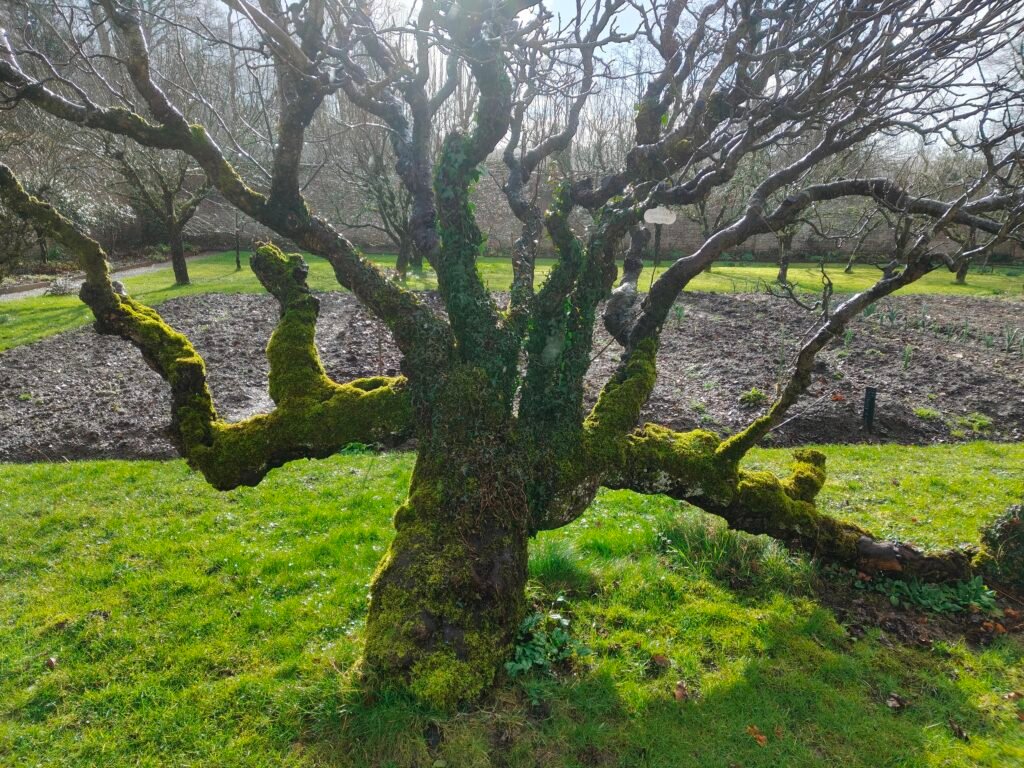
Help us find lost varieties
If you have an old apple or pear tree — especially in the Welsh Marches — we would love to hear from you.
Your fruit could be a rare or previously unknown variety.
Want More information?
Technically Minded?
Members can get our technical information on Accreditation, Fruit ID and DNA from our many downloadable files by clicking the button below.
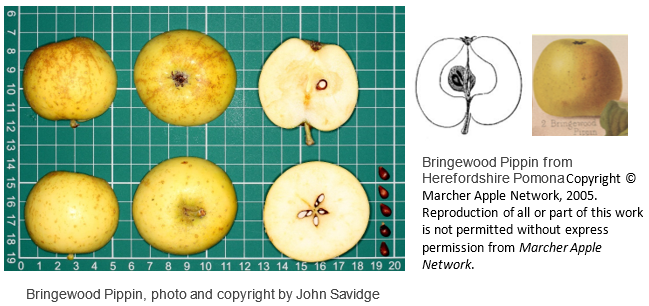
How to get your apples identified the traditional way
Our Identification Service
If you have apples you would like MAN to identify — especially if you live in or near the Welsh Marches or believe your fruit comes from this area — you can bring them to one of the shows we attend (our preferred option – see Events).
If you are further afield, please contact secretary@marcherapple.net
01
What to bring to a show we are attending:
Please provide 3–6 mature apples that show the typical:
–shape
-size
-colour
It is helpful if your samples also show some natural variation.
Pick the fruit just before it is fully ripe and make sure it is fresh and free from decay.
(We don’t usually identify cider apples, as this is a specialist area outside our main focus).
02
What else is useful to tell us:
• whether you think the apple is best for eating or cooking
• when it ripens and when it is at its best
• the approximate age of the tree – as a general guide, younger varieties will not be found on very old trees.
Any additional details can be very useful, such as:
• where the tree is growing and its growing conditions
• whether it flowers early or late compared with others
• how well the fruit keeps
• what other apple varieties were planted nearby
03
What to avoid
Try not to include “king” fruit (the large apple from the centre of the cluster), as these are often bigger and slightly different from the rest.
You may include a few leaves if available, but this is not essential.
P